
 Português
 English
 Español
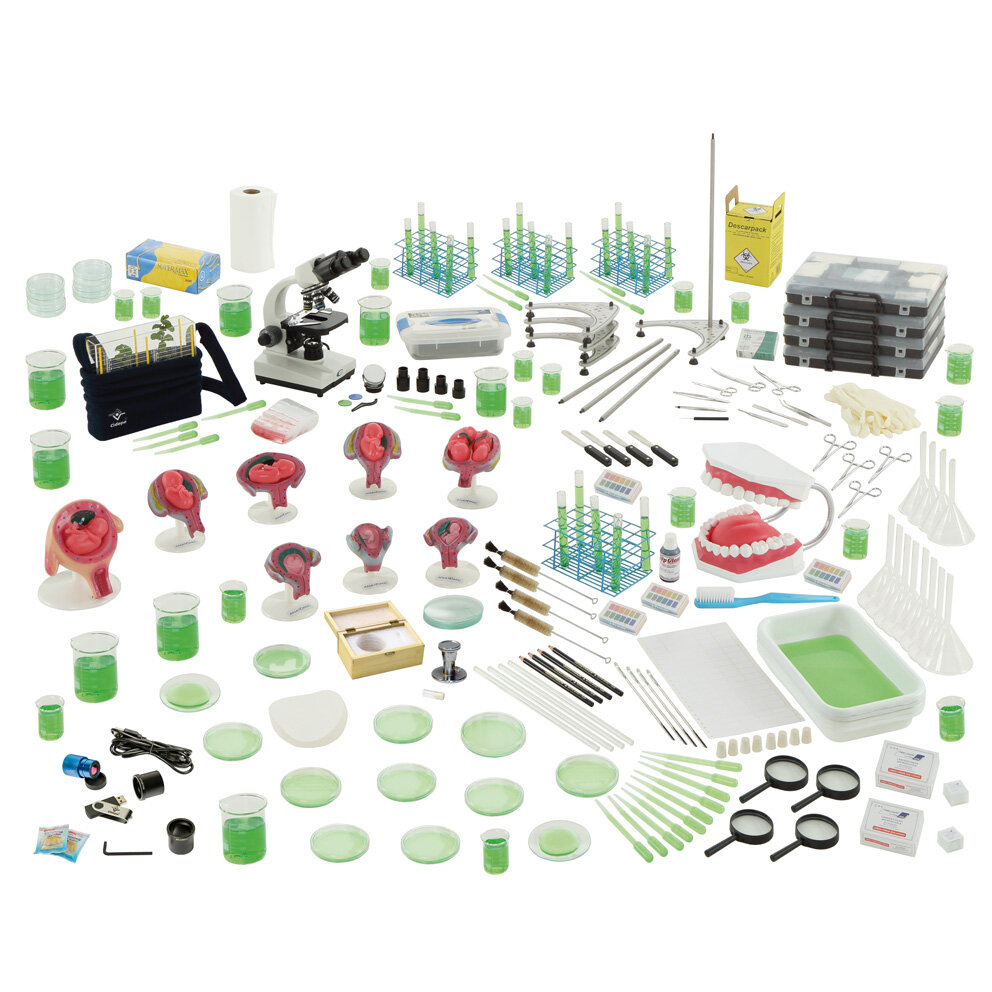
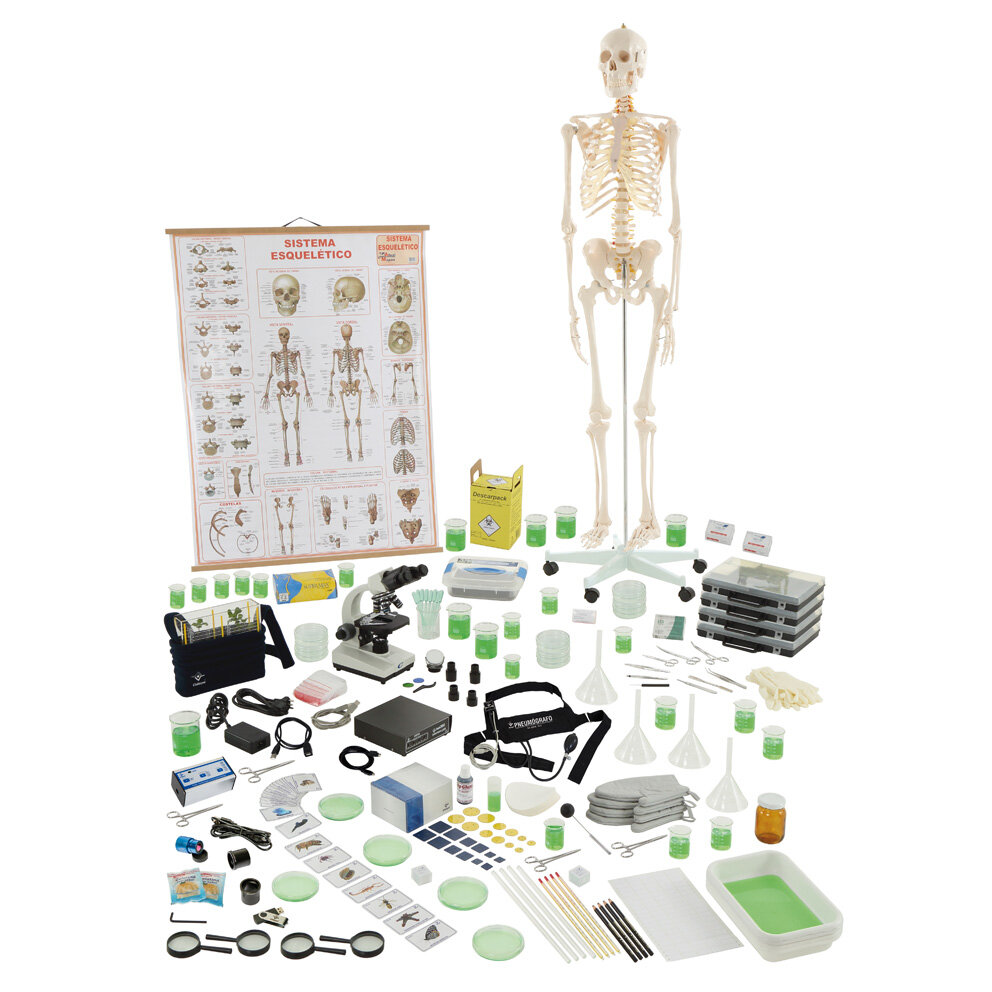
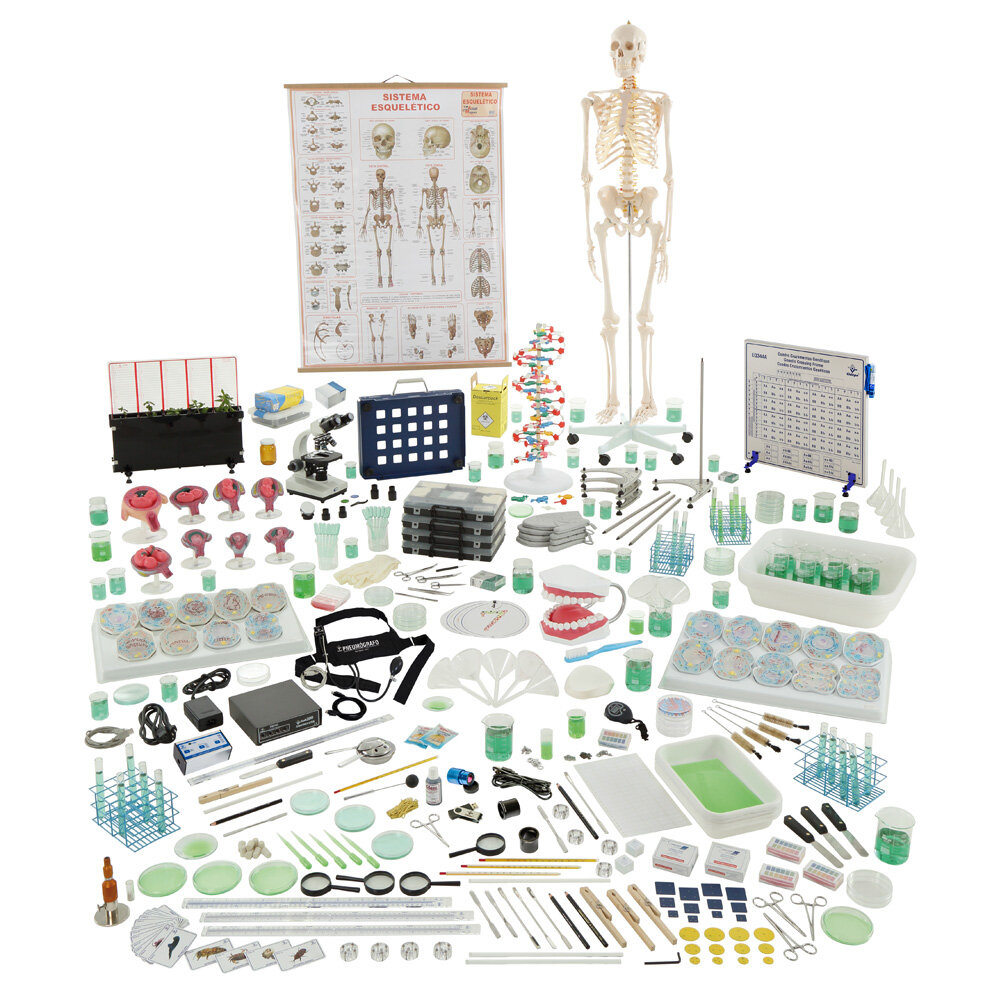
Set for biology, 4 groups
Code: EQ353
Function
Intended for experimental study, biology laboratory and conducting biology experiments on: biological microscope, soil, pollution, water, cells, tissues, muscle, osmosis, enzymes, catalase, pH, lipids, DNA, dichotomous key, microorganisms, fungi, bacteria, yeast, animals, vertebrate and invertebrate animals, pseudocoelomate and acoelomate animals, insects, locomotion, birds, grains, root, stem, leaf, micrometric section, flower, stomata, bryophytes, pteridophytes, monocotyledons, dicotyledons, circulatory system, kidney, bile, senses, reflex, respiration, skeleton, seeds, chromosomes, "AND" rule and "OR" rule, genetic crossing, Punnett square, color blindness, genes, colonization, natural selection, Darwinism, Lamarckism, etc.
Quote product

Main experiments
- General procedures for an experimental lesson FQB 1201.003
- Some safety standards QB. 1201.003A
- Some special precautions in the laboratory QB. 1201.003B
- Laboratory reports and notebooks FQB. 1201.003C
- Procedures for conducting experiments QB. 1201.003D
- Some guidelines on cleaning and drying glassware QB. 1201.005
- How do I use a biological microscope? 1505.011
- Identifying the parts of a biological microscope 1505.014
- How to identify humus-rich, sandy, and clayey soils? 0001.050
- What does its water hide? 0001.362B
- How does the water cycle work? 1505.170
- How are chromosomes divided? 0001.510
- What are buccal cells like? 1481.009A
- What is the plant tissue of an onion like? 1481.010A
- How can we verify osmosis in plant cells? 1481.011A
- What are the cells of skeletal striated muscle like? 1505.020A
- What are smooth muscle cells like? 1505.020B
- How does catalase work inside plant cells? 0003.015
- Is it possible to observe the action of enzymes? 0003.017
- How do you test the pH of different substances? 0003.019
- Which of the food samples contain lipids? 0003.024
- How do you extract and observe DNA from a fruit? 0003.025A
- What are the different types of starch grains like? 1481.412A
- How to obtain a dried specimen? 1481.050
- How do you create a dichotomous key? 1505.002
- What are yeasts like? 0001.255
- How do yeast-like fungi develop in salt and sugar? 0001.256
- How to observe aquatic microorganisms? 0001.360A
- Where are the bacteria? 1505.013
- How does the colonization of an environment occur? 1505.180
- What conditions does the egg provide for the bird to develop? 0001.240
- How can we represent the hydrostatic cavities of pseudocoelomate and acoelomate animals? 1491.003
- What do the antennae, legs, and mouthparts of insects look like? 1491.004B
- What does the kidney look like? 1491.005
- How do animals support themselves and move? 1491.006
- How do we classify invertebrates? 1505.003
- Are all circulatory systems the same? 1505.004
- What do stomata look like? 0001.173
- What are the structures of a flower like? 0001.180
- Differences between monocotyledons and dicotyledons. 1481.440
- The influence of different types of water on seed development. 1481.441
- What are the reproductive structures of bryophytes and pteridophytes like? 1505.008B
- What is bile used for? 1505.005
- How to stimulate the reflex arc 1505.006
- How can we stimulate our senses? 1505.007
- 1505.016B
- How do we breathe in different situations? 1800.012
- Are we all the same? 0001.500
- What is the probability? The AND rule and the OR rule in genetics. 1505.110
- 1505.121
- Could I be colorblind? 1505.130
- How the environment influences the germination power of seeds. 1481.436
- How does natural selection occur? 1505.140
- My arm, a whale's flipper, a horse's hoof, and a bat's wing: what do they have in common? 1505.150
- How is a gene selected in a population? 1505.160
- Are all peas the same? 1505.190