

 Português
 English
 Español
Experiential education and sustainable development: preparing students for the challenges of the future.
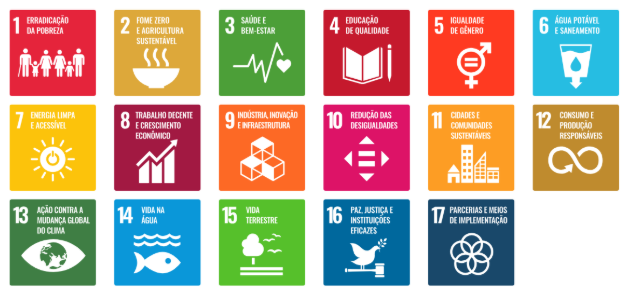
Climate change, the growing demand for energy, and the need to use natural resources responsibly are among the major challenges facing society today. Addressing these issues requires not only scientific and technological advancements, but also an education capable of preparing new generations to understand problems, investigate alternatives, and make informed decisions. In this context, the United Nations (UN) established the 17 Sustainable Development Goals (SDGs), which are part of the 2030 Agenda and represent a global commitment to economic development, social inclusion, and environmental preservation.
Figure 1 – Sustainable Development Goals (SDGs) of the UN 2030 Agenda. Source: UN Brazil (2026).
Among these goals, SDG 4 – Quality Education – highlights the importance of providing students with the knowledge and skills necessary to promote sustainable development. But how can we bring these major global challenges closer to the reality of the classroom?
One possibility lies in experimental activities, which allow the transformation of scientific concepts into practical and investigative experiences.
By observing phenomena, taking measurements, collecting data, and analyzing results, students develop skills that go beyond the theoretical understanding of the content. When related to issues such as renewable energies, energy efficiency, climate change, and the use of natural resources, these activities also allow for an understanding of how science and technology are present in the challenges faced by society. In this scenario, teaching equipment becomes an important tool for bringing scientific knowledge closer to real-world issues related to development. sustainable.
Renewable energies and the role of hydrogen in the energy transition
The search for renewable energy sources and technologies capable of reducing dependence on fossil fuels is directly related to SDG 7 – Clean and Affordable Energy, which aims to expand access to energy and the participation of renewable sources in the energy matrix.
One of the technologies that is generating interest in this scenario is The use of hydrogen as an energy vector, especially when produced from renewable sources.
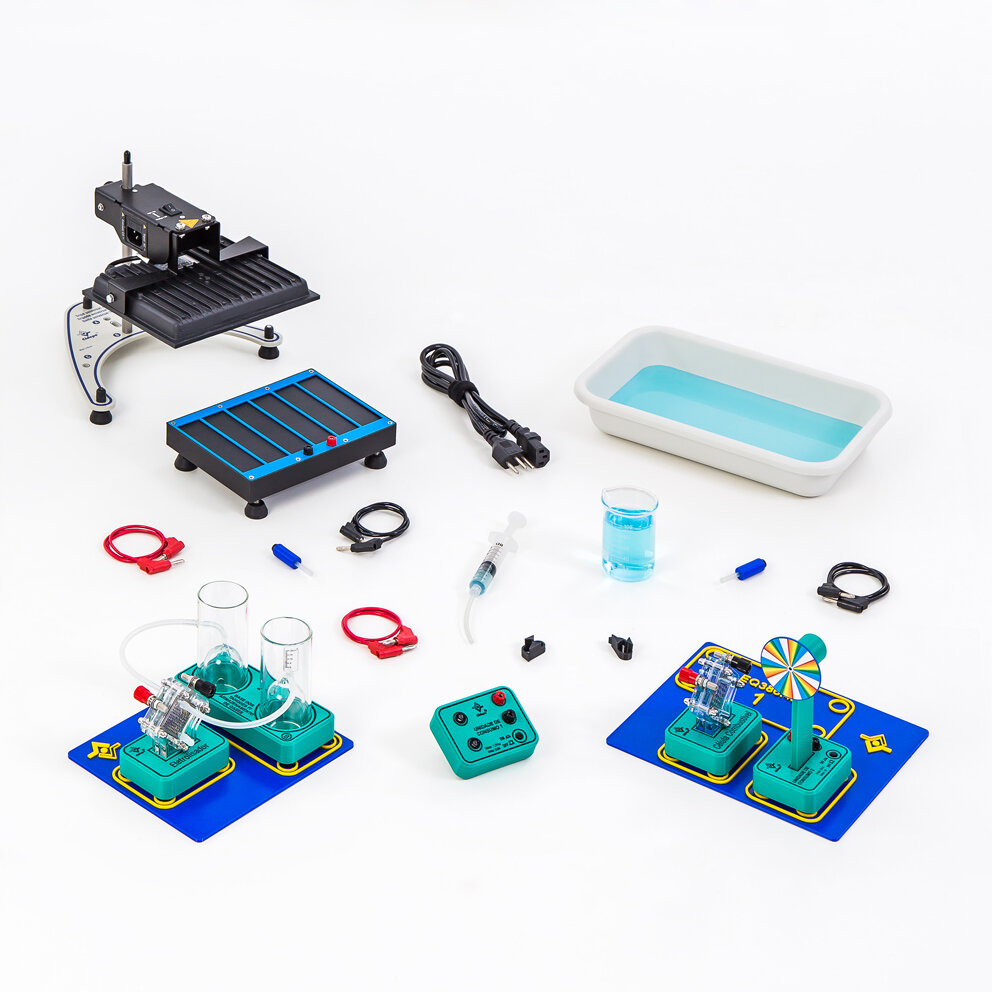
With the Renewable Energy Set with Hydrogen Cells and Consumer Units – EQ386, students can experimentally investigate the production of hydrogen by water electrolysis, its storage, and its subsequent use in fuel cells.
The equipment allows exploring the conversion of light energy into electrical energy through a photovoltaic panel and the use of this energy to produce hydrogen. Later, the stored hydrogen can be used in a fuel cell to generate electricity, powering consumer units such as motors and LEDs. By following these transformations, the student understands the scientific principles involved and can reflect on questions such as: why is it important to develop energy storage technologies? What are the advantages and limitations of hydrogen? How do losses in conversion processes influence energy efficiency? These discussions bring the experiments closer to current technological challenges, establishing relationships mainly with SDGs 7 – Clean and Affordable Energy, 9 – Industry, Innovation and Infrastructure and 13 – Action Against Global Climate Change.
Hydropower: Understanding the Generation and Use of Natural Resources
Hydropower is an important source of electricity generation and demonstrates how natural resources can be harnessed to meet society's energy needs.
However, understanding its use also involves discussing the efficiency of generation systems and the environmental impacts related to the use of water resources.
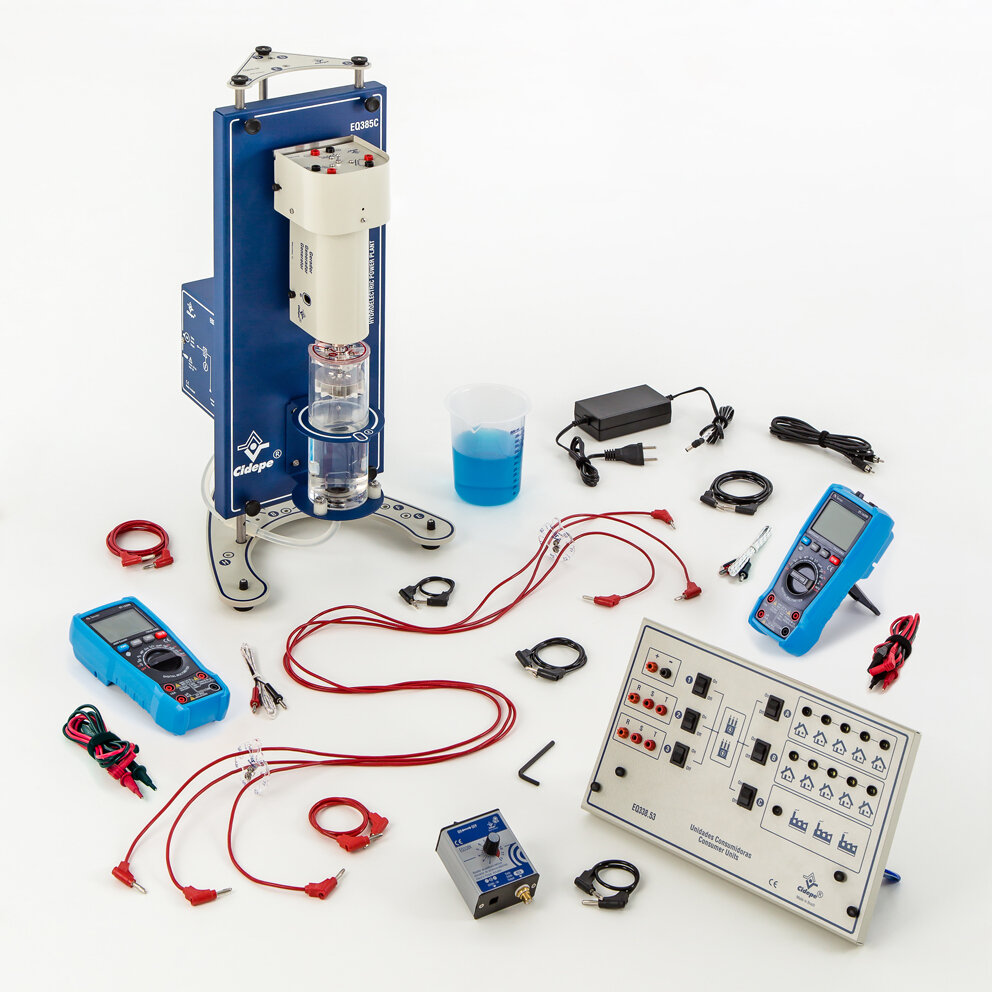
With the Renewable Energy, Hydroelectric, Consumer Unit, Multimeters – EQ385C2 set, students can investigate the operating principles of a hydro generator, analyzing how the energy of moving water is transformed into electrical energy.
During the experimental activities, it is It is possible to study the turbine's movement, the electrical frequency, the rotational speed, and the electrical power consumed.
The set also allows exploring the distribution of energy produced to consumer units representing different demands, bringing the experiments closer to the principles used in real electricity generation and distribution systems.
These experiments make it possible to broaden the discussion to issues related to sustainable development: how to use water resources responsibly? What is the importance of efficiency in energy generation?
What benefits and environmental impacts should be considered when using renewable energy sources?
In this way, the equipment allows relating knowledge of Physics and Engineering to SDGs 7 – Clean and Affordable Energy, 9 – Industry, Innovation and Infrastructure, and 12 – Responsible Consumption and Production.
Meteorological monitoring: investigating the environment through real data
Understanding atmospheric conditions and their variations is fundamental for the study of the environment and meteorological phenomena.
SDG 13 – Climate Action highlights the importance of education and awareness in addressing the challenges related to climate change. In this context, the observation and analysis of environmental data are important tools for the development of scientific knowledge.
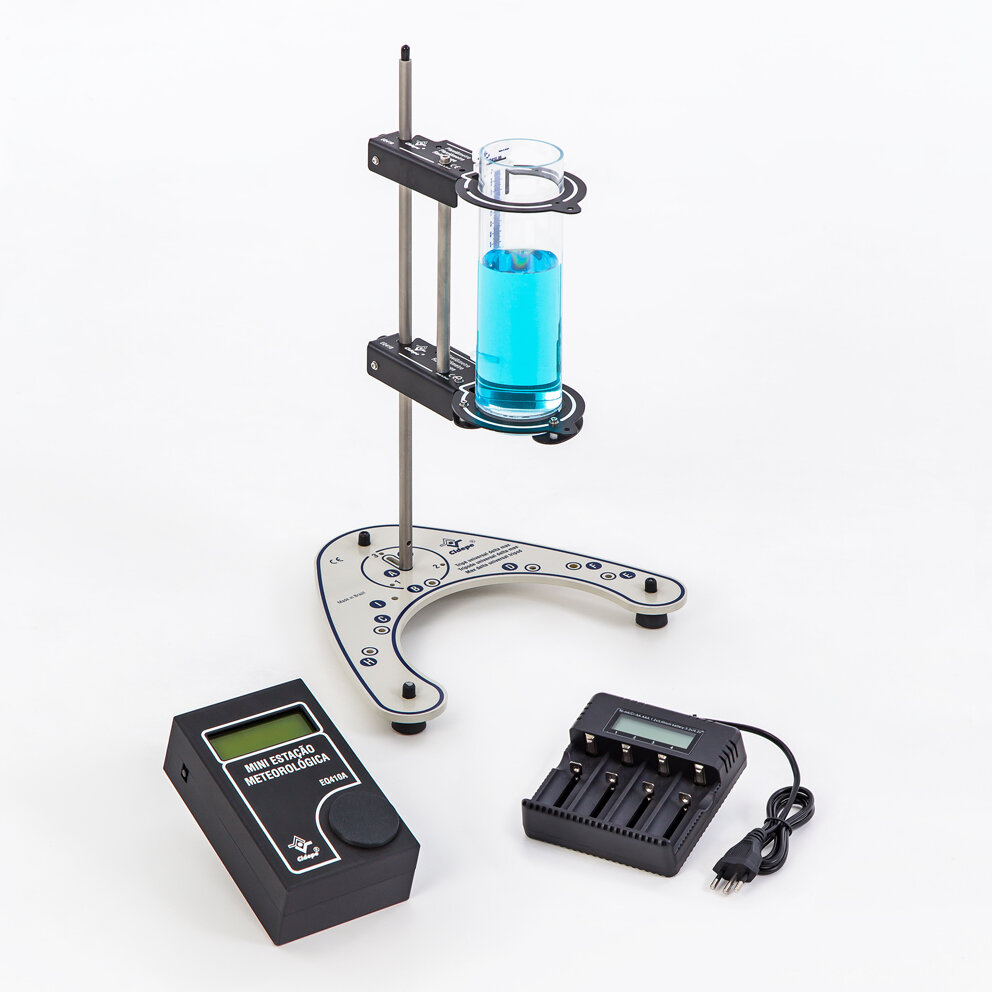
With the didactic meteorological station with rain gauge – EQ410B allows students to take measurements of air temperature, relative humidity, atmospheric pressure, and precipitation, monitoring the variations of these quantities over time.
The data obtained can be organized into tables and graphs, allowing for statistical analyses and interpretation of the behavior of atmospheric conditions at the measurement location.
A particularly relevant possibility is to compare the experimental results with data provided by nearby official meteorological stations.
study region.
In this way, students can investigate questions such as: why do temperature and humidity vary throughout the day? How does precipitation influence water availability? Why is meteorological monitoring important?
important for society?
These activities also allow discussion of the importance of long-term meteorological records for the study of climate, differentiating variations in weather conditions from processes related to climate change.
By bringing scientific investigation closer to the environmental conditions observed in the students' daily lives, the equipment establishes relationships with SDGs 6 – Clean Water and Sanitation, 11 – Sustainable Cities and Communities, and 13 – Action Against Global Climate Change.
From experimentation to transformation: preparing new generations for the challenges of sustainability
The challenges related to climate change, The energy transition and the responsible use of natural resources show that science education plays a fundamental role in building a more sustainable future. In this context, experimental activities represent an opportunity to bring curricular content closer to issues present in society, allowing students to understand not only how scientific phenomena occur, but also why this knowledge is important. By investigating the production of energy from hydrogen, the functioning of a hydrogenerator, or the meteorological conditions of their own In this region, the student begins to relate the concepts studied to concrete situations, recognizing their applications and environmental, social, and technological implications.
More than conducting experiments and obtaining results, it is important that the proposed activities make sense to the student, awaken their curiosity, and encourage them to question, interpret information, and seek solutions to real problems.
After all, future generations will need to face challenges that require scientific knowledge, critical thinking, creativity, and the ability to make informed decisions.
It is In this sense, experimentation gains even more relevance: by connecting science, technology, and sustainability, it contributes to training students who not only understand the world they live in, but are better prepared to participate in its transformation.
Discover CIDEPE's didactic solutions for experimental teaching of renewable energies and environmental monitoring:
EQ386: Renewable energy set with hydrogen cells and consumer units.
EQ385C2: Set of renewable energy, hydroelectric, consumer unit, multimeters.
EQ410B: Meteorological station didactics with rain gauge.
Reference: United Nations (UN). Sustainable Development Goals – Agenda 2030. https://brasil.un.org/pt-br/sdgs